
AEGEE-Europe’s Statement on the European Housing Crisis
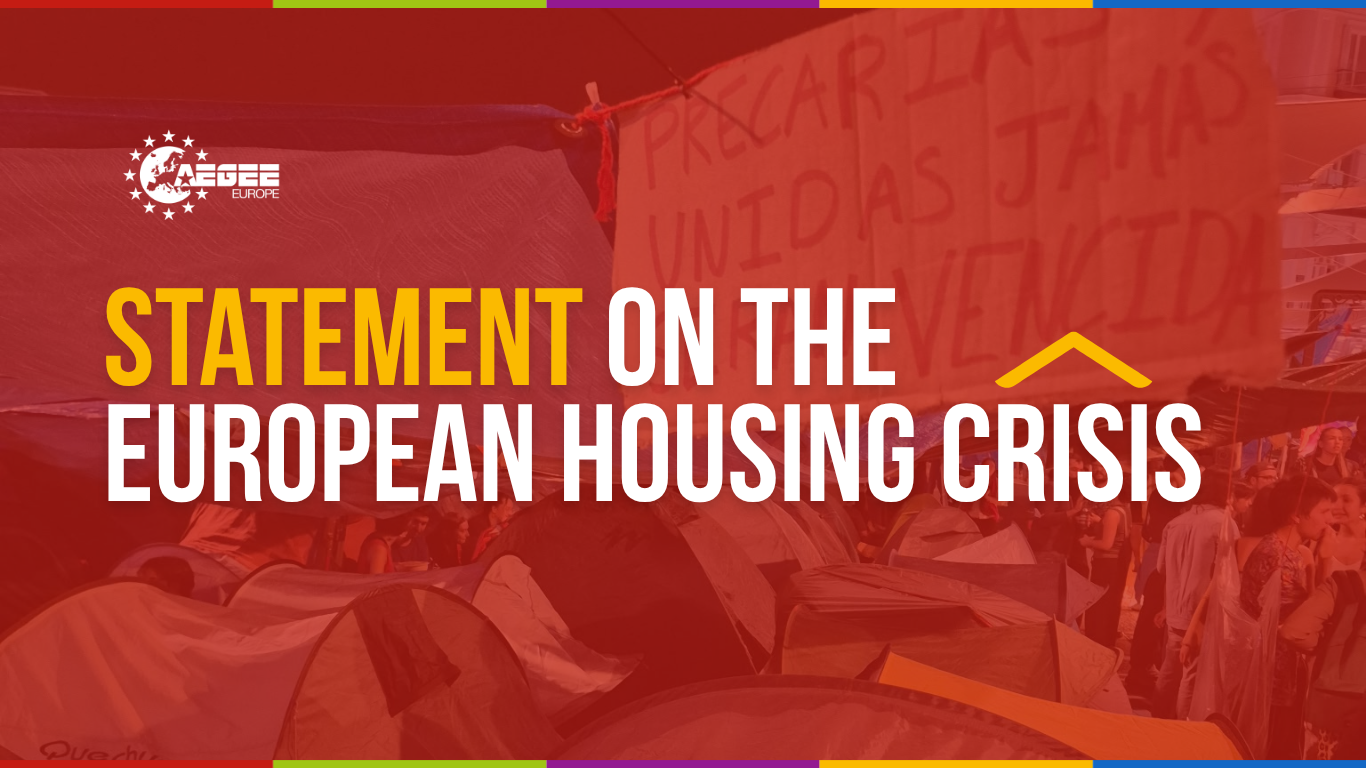
The housing crisis has become a structural problem across much of Europe, and the events of recent weeks in Spain show that public patience is running out. Following the eviction of an 87-year-old woman from her home on 23 September, with no alternative housing offered, tens of thousands of people took to the streets in Madrid and in almost 50 other Spanish cities [1]. The protests intensified when parliament rejected emergency measures intended to protect vulnerable tenants. These protests are not an isolated reaction to a single case. They reflect years of rising rents, insufficient affordable housing, and policy responses that have been too limited and too slow [2].
The concern is not limited to Spain. In Dublin, people recently took to the streets in a protest that put housing and the cost of living at the centre of its demands [3]. Different cities and countries are voicing the same concern across Europe and beyond: people are being priced out of their own communities.
AEGEE-Europe stands in solidarity with everyone mobilising for their right to a decent home, many of them young people. Therefore, we call on all European countries to acknowledge that this challenge is no longer local or regional. Rising housing costs affect where people can study, work, and build their lives, and they hold back the mobility and cultural exchange opportunities that Europe promises its citizens. And young people are particularly affected.
According to Eurostat, in 2025, 9.1% of young people aged 15–29 in the EU lived in households spending 40% or more of their income on housing, compared with 7.7% of the total population [4]. In Denmark and Greece, around 1 in 4 young people were affected, and in 16 of the 27 Member States, young people were more impacted than the population as a whole. Young people at risk of poverty are hit hardest. The Youth Wiki report on youth access to affordable and quality housing found that their share is almost four times higher than that of young people who are not at risk [5].
The consequences go beyond finances. In a 2025 Flash Eurobarometer survey, almost a quarter of young Europeans aged 16–30 named housing affordability as their biggest worry, and more than a third believed the EU should invest more to support them in housing and the cost of living.
In September, we encouraged everyone to sign the European Citizens’ Initiative “Right to Housing! Now and Forever”, to bring these demands to the European level. Signing petitions and adopting one-off measures can be a first step. We must keep advocating for a lasting series of structural reforms that protect those most at risk of housing exclusion, including, but not limited to, students and other young people across Europe.
AEGEE-Europe therefore urges the European institutions to:
- present a dedicated European package on housing, setting out a coordinated and ambitious response to the housing crisis;
- ensure all age groups are covered by its measures, so that young people, families, older persons and other vulnerable groups are protected;
- develop policy guidance and frameworks that Member States can adopt, supporting affordable, secure and sustainable housing across the Union.
AEGEE-Europe will keep advocating and sharing young Europeans’ experiences and perspectives in this process, and will work with European institutions, national authorities and civil society towards solutions that guarantee housing as a right, not a privilege.
This statement was written by David Mediavilla Aller, Vice-President & External Relations Director of AEGEE-Europe.
Sources:
[1] The Guardian. (2026, October 3). ‘This can’t go on’: Tens of thousands protest against housing crisis in Spain. The Guardian. Retrieved October 9, 2026, https://www.theguardian.com/world/2026/oct/03/spain-housing-protest
[2] Müller, S. (2025, June 15). Spain housing crisis: Locals blame tourists and speculators. Deutsche Welle. Retrieved October 9, 2026, https://www.dw.com/en/spain-housing-crisis-locals-blame-tourists-and-speculators/a-72816676
[3] O’Callaghan, G. (2026, September 19). Housing and the cost of living highlighted during protest. RTÉ News. Retrieved October 9, 2026, https://www.rte.ie/news/ireland/2026/0919/1592189-cost-of-living-protest/
[4] Eurostat. (2026). Housing cost overburden rate by age, sex and poverty status (Data set: ilc_lvho07a). European Commission. Retrieved October 9, 2026, from https://ec.europa.eu/eurostat/databrowser/view/ilc_lvho07a/default/table
[5] European Commission, European Education and Culture Executive Agency, & Youth Wiki. (2026). Youth access to affordable and quality housing: A comparative analysis of national policies (Youth Wiki report). Publications Office of the European Union.