
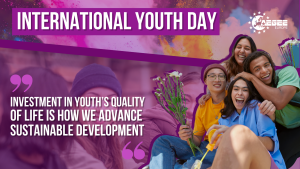
Every year, on August 12th, we celebrate International Youth Day to highlight young people’s role in achieving sustainable development, as well as the challenges they face. This year’s theme, Different Contexts, Common Aspirations, invites us to recognise that while young people’s lives are largely shaped by their local realities, their concerns and wishes for the future are more common than one might think.
Concerns about structural barriers that undermine quality of life, such as job scarcity, precarious internships, housing affordability and policy choices that limit their ability to become active citizens and lead meaningful and fulfilling lives, are on the minds of many young people, regardless of where they come from. We heard this directly from young people in our consultations, including our most recent one on the EU Youth Goals, and it is also reflected in broader research.
Youth activism has always been a driving force for social change. We encourage young people to participate, volunteer, organise, advocate, and shape the future of society, but are we truly creating the conditions in which they have the time, security, and resources to do so? According to the youth we spoke to, no. This is hardly surprising when they are constantly worrying about whether they can meet their basic needs, leaving them with little capacity to pursue their goals and contribute and participate in society.
If we want young people to shape the societies they live in, we need to ensure they have the conditions to do so. As AEGEE, we believe that investments in young people’s quality of life should be recognised as long-term investments with lasting societal benefits, rather than measures aimed only at immediate returns, because, to us, investing in quality of life is investing in youth development and societal advancements. We identified four conditions that are necessary for young people to actively participate in society: economic security, decent opportunities, agency and autonomy over their life choices, and opportunities for meaningful youth participation.
We therefore call upon the European Commission to address the substantive barriers that hamper young people from actively participating in society, while ensuring that young people are meaningfully involved in developing these solutions. The EU Youth Goals consultation has provided the European Commission with suggestions from young people on how to improve their quality of life. Consultation is an important first step, but meaningful participation cannot end there. We therefore urge the European Commission to:
- co-develop policies for improving youth’s quality of life directly with youth;
- include youth in the implementation and evaluation of these policies; and
- ensure young people receive feedback about what happened to their input.
Statement written by Teddy van Amelsvoort, Policy Officer towards EU Youth Goals and EU Youth Dialogue
Sources
- https://www.un.org/en/observances/youth-day
- https://social.desa.un.org/issues/youth/events/international-youth-day-2026
- https://europeandemocracyhub.epd.eu/misunderstanding-youth-activism/
- https://www.oecd.org/en/publications/risks-that-matter-for-young-people_62b44423-en.html
- https://www.un.org/en/global-issues/youth